
Why Interior Materials Look Different in Real Spaces
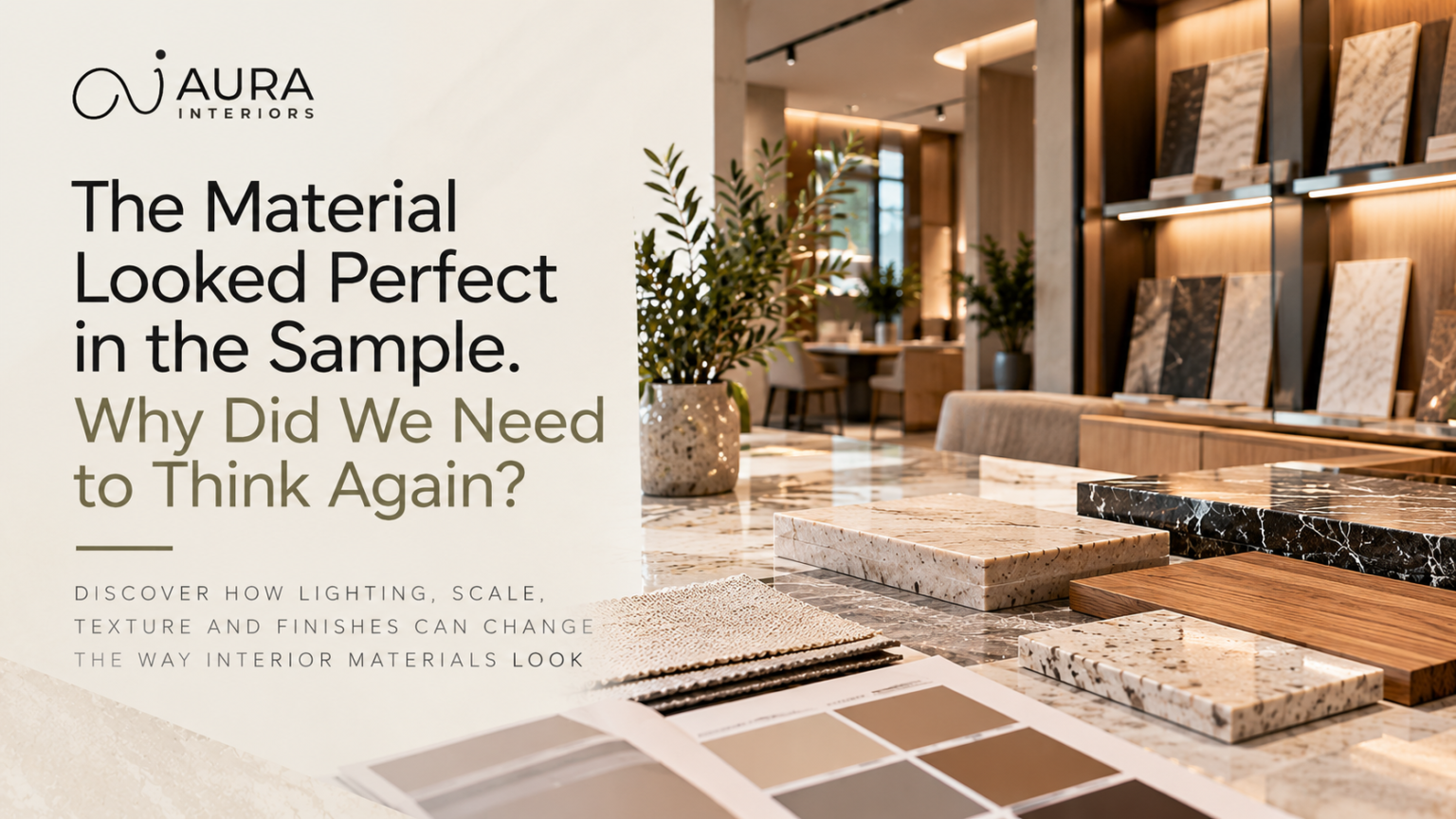
Interior material selection is an important part of creating a well-designed space. Materials that look perfect in a showroom may appear different under office lighting or when installed across larger surfaces. Lighting, scale, texture and surrounding finishes all influence the final appearance of interior materials.
Then the sample arrived at the actual site.
Placed beside the flooring, it appeared slightly darker. Under the office lighting, its undertones seemed different. When viewed across a larger surface, the pattern felt much stronger than expected.
Suddenly, the material that had looked perfect in the showroom needed another look.
This is a familiar moment in interior design. A material can look beautiful on its own but behave differently when it becomes part of a complete space.
The reason is simple: choosing an interior material is not just about liking a sample. It is about understanding how that material will look, feel and function in its final environment.
For projects involving office interiors, retail spaces or hospitality environments, this decision can influence the entire design direction.
1. The Showroom Light Was Not the Same as the Site Light
One of the first things that changes how a material looks is lighting.
A wood finish may appear warm under yellow-toned showroom lighting but look cooler beneath white LED lights. A beige stone can appear creamy in natural daylight and slightly grey in a space with limited sunlight.
Even the direction of the light matters. Light falling directly onto a polished surface can create reflections, while light coming from the side may highlight texture and imperfections.
This is why material selection should never depend entirely on how a sample looks under showroom conditions.
What should you do instead?
View samples under the lighting conditions planned for the finished space. If possible, compare them near windows, under the proposed artificial lighting and alongside the other selected finishes.
For businesses planning commercial interior design in Dubai, this step can help create a more consistent visual experience across reception areas, meeting rooms and open workspaces.
2. A Small Sample Cannot Tell the Whole Story
A small sample is useful for understanding colour, texture and finish. However, it cannot always show how a material will look across an entire wall, floor or reception counter.
Imagine choosing a marble-effect surface with bold veins. On a small sample, the pattern looks attractive and distinctive. Across a large wall, those same veins may become the dominant feature of the room.
The opposite can also happen. A subtle wood texture may look almost plain on a small sample but create a rich, layered appearance when installed across several cabinets or wall panels.
Scale changes perception.
What should you do instead?
Request larger samples or sample boards for materials that will cover significant areas. Where practical, review a mock-up or arrange the material in the actual space before approving the final specification.
This is particularly useful for feature walls, flooring, large-format tiles, stone surfaces and custom joinery.
3. The Material Looked Right Alone but Not Beside Everything Else
Interior materials rarely work in isolation.
A flooring finish may look beautiful by itself, but when paired with the selected wall paint, furniture, ceiling and lighting, the combination may feel too cold, too busy or visually unbalanced.
For example, a dark wood finish might work well with a warm neutral wall. However, when combined with dark flooring and a heavily patterned stone surface, the same wood may make the room feel visually crowded.
The issue is not necessarily the material itself. It may simply be the relationship between the different finishes.
What should you do instead?
Review materials together rather than approving each one separately. Create a coordinated material palette that includes flooring, wall finishes, ceiling materials, furniture, metal details and fabrics.
For an office fit-out, the palette should also support the intended atmosphere. A collaborative workspace may benefit from lighter finishes and natural textures, while a formal reception area may require a different balance of materials and contrast.
The objective is to create a cohesive interior rather than a collection of individually attractive products.
4. Texture and Finish Matter More Than We Expect
Two materials can have almost identical colours but produce very different results because their surfaces reflect light differently.
A polished stone surface may feel luxurious and reflective. A honed finish in a similar colour may appear softer and more understated. Matte cabinetry can create a contemporary look, while a glossy finish may make the same colour appear brighter.
Texture also affects how a space feels. Natural wood grain, textured wall panels and tactile fabrics can introduce warmth, while smooth surfaces may create a cleaner, more minimal appearance.
There are practical considerations, too. Maintenance, durability, slip resistance where relevant, cleaning requirements and suitability for the intended application should all be considered.
What should you do instead?
Evaluate the appearance and performance of each material. Ask how it will be used, how often it will be touched or cleaned, and whether its finish is appropriate for the environment.
A material should support both the design concept and the everyday needs of the people using the space.
5. Sometimes, the Right Decision Is to Reconsider
Changing a material after reviewing it on-site does not necessarily mean the original design was wrong.
It may mean that the team has discovered something important before installation.
A sample review might reveal that the selected flooring clashes with the cabinetry, that a stone pattern is too prominent for the space, or that a finish is unsuitable for the expected level of use.
Making a considered change at this stage can be more practical than accepting a compromise that affects the finished interior.
However, changes made after procurement or installation can affect costs and timelines. That is why material approvals should happen as early as possible.
A practical approach is to approve a coordinated set of samples before placing major orders. Record the selected product, colour, finish and specification so that everyone involved is working from the same reference.
For larger projects, a sample board or approved mock-up can become a useful reference throughout execution.
How Aura Interiors Approaches Material Selection
Good interior design is about more than selecting attractive colours and finishes. Every material needs to work with the architecture, lighting, intended use and overall design concept.
At Aura Interiors, material selection forms part of creating interiors that balance aesthetics with practical requirements. Considering finishes in relation to the complete space helps businesses make more informed decisions before moving into execution.
Whether you are planning an office, a retail environment or another commercial interior, a coordinated design approach can help align materials, furniture, lighting and architectural details.
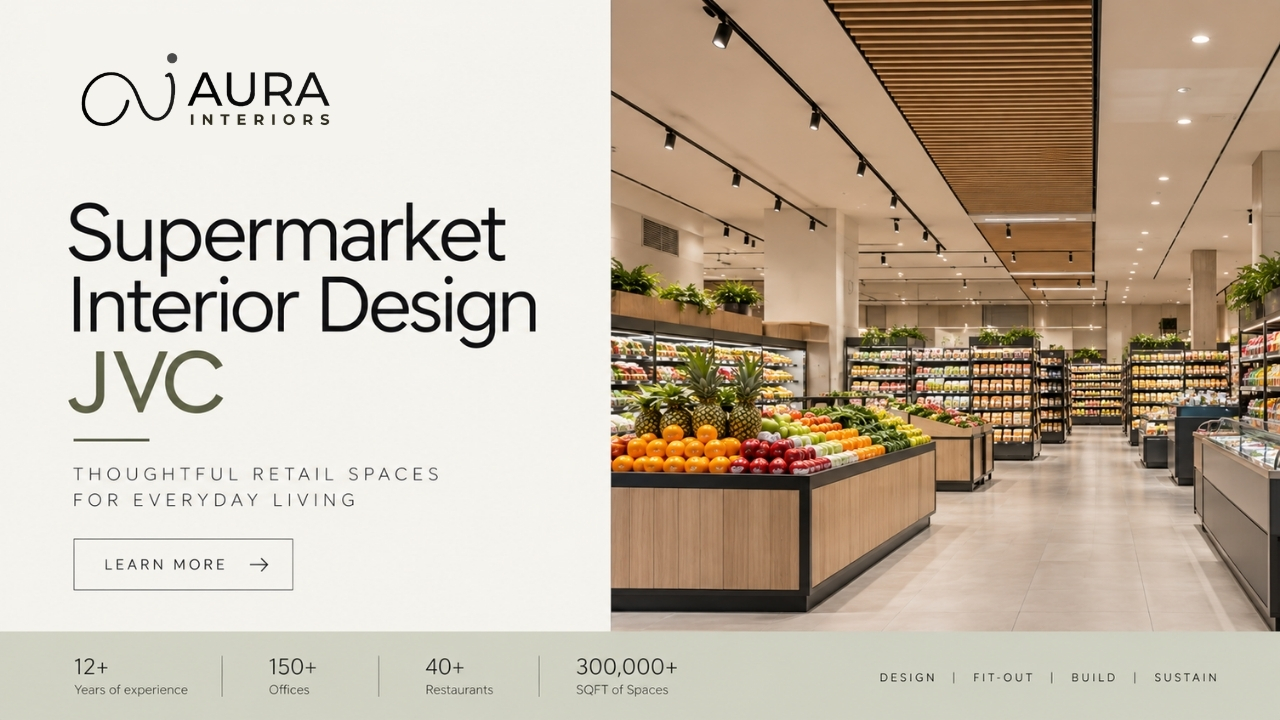
Explore Aura Interiors to learn more about its interior design services, or visit the supermarket interior design project page to explore a commercial design application.
Frequently Asked Questions
Lighting, surrounding colours, surface texture, sample size and viewing angle can all influence how a material appears in its final environment.
Yes, whenever practical. Reviewing samples under the site’s natural and artificial lighting helps you assess how they coordinate with the existing surroundings and proposed finishes.
Compare materials together, request larger samples where needed, review important finishes in the actual space and confirm the final specifications before ordering.
No. The best choice depends on the design objective, durability, maintenance requirements, installation conditions and budget. A suitable material is one that performs well while supporting the overall design.
Major materials should ideally be selected and approved during the design and pre-construction stages, allowing sufficient time for specification, procurement and coordination before installation.
Final Thoughts
That material sample was not necessarily a bad choice. It simply told only part of the story.
The real decision came when it was viewed alongside the lighting, surrounding finishes, available space and practical requirements of the project.
That is why thoughtful material selection matters. Looking beyond the sample helps create interiors in which every surface feels intentional and every finish contributes to the larger design.
Planning an interior project in Dubai? Connect with Aura Interiors to discuss your design requirements and explore material choices that suit your space, aesthetic and functional needs.