
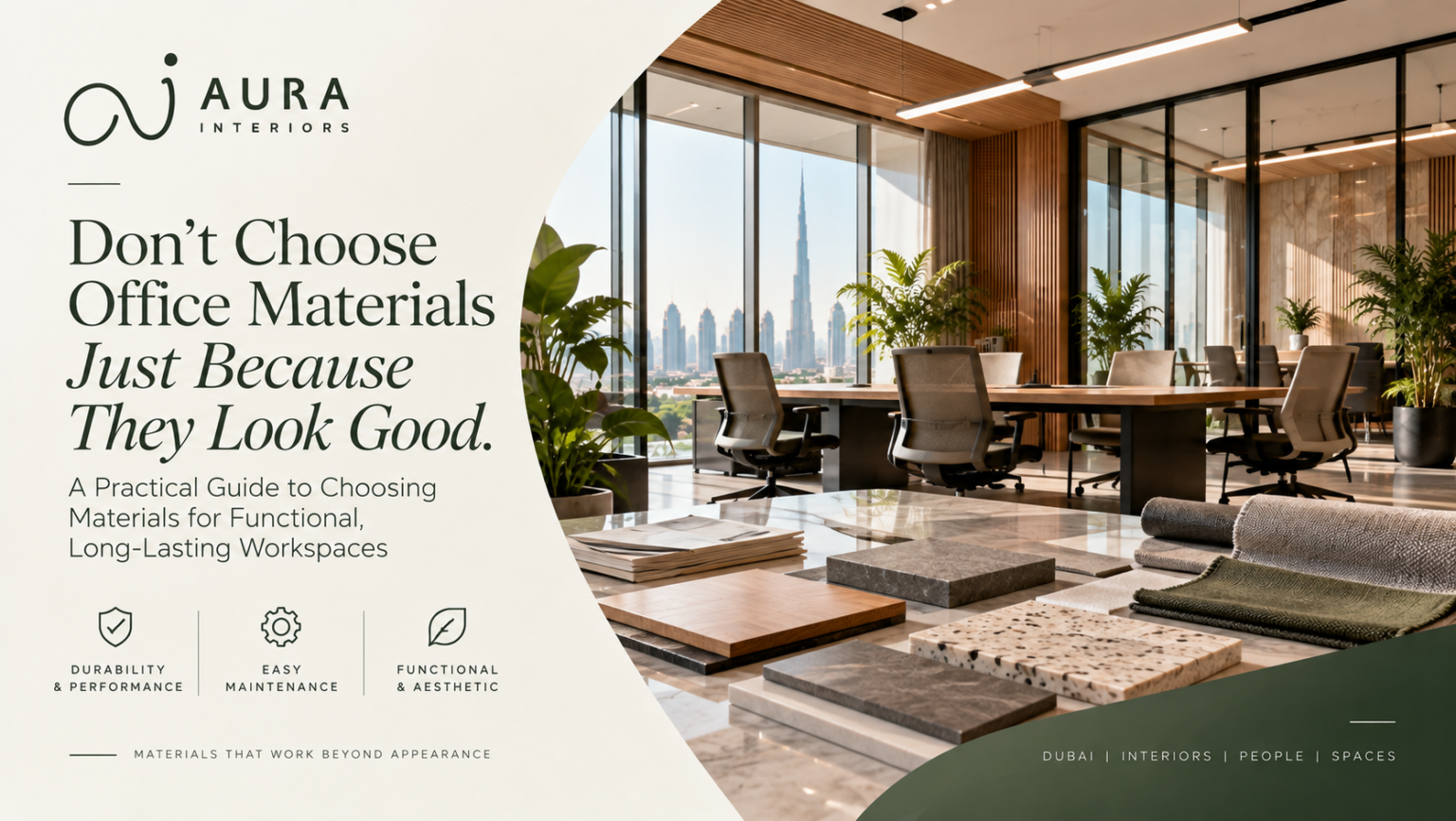
Office material may look perfect in a sample book but not be the right choice for the space.
A lovely stone finish may need more up-keep than you may anticipate. A stylish flooring material may not be able to withstand heavy foot traffic. A visually interesting partition may not provide much acoustic privacy. The best of surfaces will soon look tired if they are unable to stand up to the daily demands of a busy workplace.
That’s why material selection should begin with the way the office will be used, not simply the way a material looks.
For a successful office interior design in Dubai, every finish should contribute to the wider design concept while also responding to durability, maintenance, functionality and the experience of the people using the workplace.
The First Question Should Be: Where Will This Material Be Used?
Different areas of an office experience different levels of activity.
Reception areas have to make a big first impression and deal with a constant flow of visitors. Corridors should be finished with durable materials since employees walk through them many times a day. Materials used in meeting rooms may need to ensure acoustic comfort, while surfaces in workstations need to be practical and easy to clean.
This is where good office space planning intersects with material selection.
Instead of asking only, “Does this look premium?”, the design process should also ask:
- How frequently will the surface be used?
- How much cleaning will it require?
- Will it experience heavy traffic?
- Does it need acoustic performance?
- How will it respond to lighting?
- Can it be repaired or replaced easily?
- Will the material remain appropriate as the workplace evolves?
Aesthetics Should Support the Working Environment
The materials are the main factor that creates the personality of an office.
Timber can bring in warmth. Glass can create openness. Stone can add richness. Textured surfaces give a sense of depth. Metal details can give a more modern character.
But these materials fare better when selected according to the function of each space.
An open-plan office, for example, could be enhanced with a combination of acoustic finishes, soft furnishings and carefully chosen partitions. Reception areas can use a more distinct material palette since it is the first visual impression of the company.
In professional commercial interior design, the objective is not to use expensive materials everywhere. The goal is to use the right materials in the right places.
Durability Matters More Than the Sample
The office is a different experience than the showroom.
Every day employees move furniture, carry equipment, walk through common areas and use shared facilities. Materials must function in real conditions.
Before specifications are finalised, when considering an office fit-out in Dubai, the foot traffic, cleaning requirements, moisture exposure, impact resistance and maintenance schedules need to be taken into consideration.
Sometimes, a slightly higher quality material may make more sense when you consider the longer service life and easier maintenance in addition to the initial cost. .
Lighting Can Change How a Material Looks
A material should never be judged in total isolation from its environment.
The appearance of a surface can be changed by natural light, artificial light, colour temperature and surrounding finishes. A texture that seems subtle in showroom lighting can look a lot more pronounced with directional lighting.
This is especially important when choosing feature walls, flooring, joinery, ceilings and decorative finishes.
An experienced interior design and fit-out company in Dubai will be able to think about materials alongside lighting, spatial proportions and the overall design language rather than seeing each choice as a separate decision.
The Best Material Palette Has a Reason
An office that is well designed does not require dozens of different finishes.
A carefully managed palette can create coherence around the workplace while allowing each individual space to have its own character. The reception area can introduce the primary design language, while meeting rooms, workspaces and breakout areas can reinterpret the language in their own way.
This creates a more unified workplace and assists in the purposefulness of each material.
What you get is an office where aesthetics and performance are not at odds but are one and the same.
Design Highlights
- Materials selected according to actual workplace use
- Balance between visual appeal and durability
- Consideration of maintenance and long-term performance
- Acoustic requirements integrated into material decisions
- Lighting considered alongside surface finishes
- Consistent material palette across different office zones
- Premium finishes used strategically rather than unnecessarily
Frequently Asked Questions
What should be considered when selecting office materials?
Durability, maintenance, acoustic performance, functionality, lighting, traffic levels, safety requirements and overall design intent should all be considered alongside appearance.
Are expensive materials always better for an office?
Not necessarily. The right material depends on where it will be used and what performance is required. A practical, durable material can sometimes be more appropriate than a more expensive decorative option.
Why is material selection important during an office fit-out?
Material decisions affect the appearance, durability, maintenance requirements and user experience of the completed workplace. Making these decisions early can also help maintain design and budget consistency.
How do materials influence office design?
Materials influence atmosphere, acoustics, texture, visual identity and perceived quality. When selected thoughtfully, they can help create a workplace that is both functional and distinctive.
Designing Beyond What Looks Good
The best office interiors don’t result from choosing the most eye-catching material for every surface. They are created by knowing why a given material belongs in a given space.
At Aura Interiors, material selection can be integrated into a broader design process linking aesthetics, functionality and fit-out execution. Every decision from workplace planning to finishes and detailing may improve the experience of the finished office.
When planning an office interior design or interior fit-out in Dubai, a good material strategy can help you to create a workplace that still looks considered and performs well in everyday use.